
Bipolar disorder: types, symptoms and treatment
Bipolar disorder (once called manic-depressive illness or manic depression) is a mental health condition that causes unusual shifts in a person's mood, energy, activity levels and concentration. These shifts can make everyday tasks hard to carry out.
There are three types of bipolar disorder. All three involve clear changes in mood, energy and activity. These range from periods of extremely "up", elated, irritable or energised behaviour (manic episodes) to very "down", sad, indifferent or hopeless periods (depressive episodes). Less severe manic periods are known as hypomanic episodes. In this article we look at bipolar disorder more closely.
What is bipolar disorder?
In bipolar disorder, a person has periods of high mood and periods of low mood. As mentioned above, there are three types.
Types of bipolar disorder
The bipolar disorders are:
Bipolar I disorder
Bipolar I is defined by manic episodes that last at least 7 days (nearly every day for most of the day), or by manic symptoms so severe that the person needs immediate medical care. Depressive episodes usually occur as well, typically lasting at least 2 weeks. Episodes with mixed features (depressive and manic symptoms at the same time) are also possible. Having four or more episodes of mania or depression within a year is called "rapid cycling".
Bipolar II disorder
Bipolar II is defined by a pattern of depressive episodes and hypomanic episodes. Hypomanic episodes are less severe than the manic episodes of bipolar I.
Cyclothymic disorder (cyclothymia)
Cyclothymic disorder is defined by recurring hypomanic and depressive symptoms that are not intense enough, or do not last long enough, to qualify as hypomanic or depressive episodes.
Sometimes a person has symptoms of bipolar disorder that do not match the three categories above; this is called "other specified and unspecified bipolar and related disorders".
Bipolar disorder is often diagnosed in the late teens or early adulthood. Sometimes symptoms appear in children. Although symptoms can change over time, bipolar disorder usually needs lifelong treatment. Following a treatment plan can help people manage their symptoms and improve their quality of life.
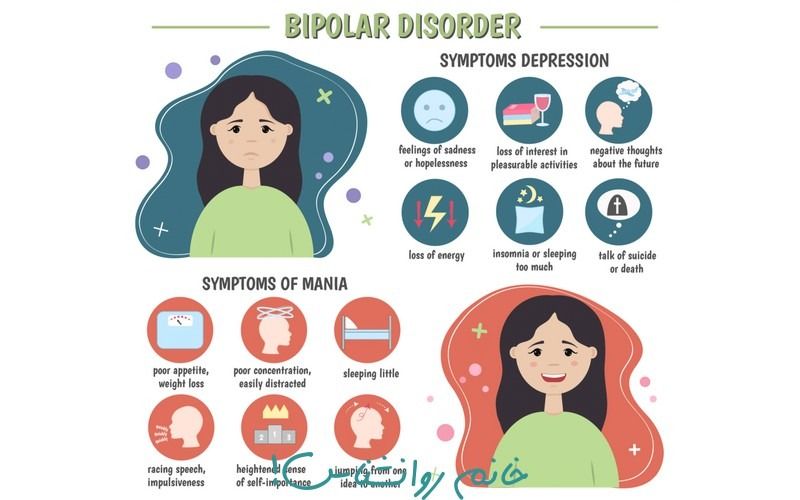
Symptoms of bipolar disorder
People with bipolar disorder have periods of unusually intense emotion, changes in sleep patterns and activity levels, and behaviour that is out of character for them, often without recognising its likely harmful effects. These distinct periods are called mood episodes. They are very different from the person's usual moods and behaviour. During an episode, symptoms last every day for most of the day, and episodes can continue for several days or weeks.
| Symptoms of a manic episode | Symptoms of a depressive episode |
|---|---|
| Feeling very "up", elated, or extremely irritable | Feeling very sad, empty or hopeless |
| High energy, restlessness and increased activity | Low energy, slowed down or restless |
| Less need for sleep | Sleeping too little or too much |
| Talking fast, jumping between topics, racing thoughts | Trouble concentrating, making decisions and remembering |
| Feeling unusually important or powerful | Feeling worthless or guilty |
| Risky behaviour such as overspending or reckless driving | Losing interest in almost all activities; thinking about death or suicide |
Treatment of bipolar disorder
Bipolar disorder usually needs long-term treatment, most often a combination of medication and psychotherapy. The main medicines are mood stabilisers (such as lithium) and some antipsychotic medicines. Antidepressants on their own can trigger mania in some people, so they are usually prescribed with a mood stabiliser and with caution.
Psychotherapies such as CBT, psychoeducation (helping the person and family understand the illness), family therapy and interpersonal and social rhythm therapy help people manage their symptoms. Regular sleep, a daily mood diary and avoiding alcohol and drugs also matter. Stopping medication without advice raises the risk of relapse; any change to medication should be made with a doctor.