
Preformationism: an early theory of child development
There are many theories of human and child development, and one of the earliest is preformationism. It is also one of the best known, and it paved the way for scientists to build more complete theories.
When I first read about this theory it struck me as very narrow-minded, and do not be surprised if you feel the same. But remember that it really was believed and applied, and as William Crain's book Theories of Development says, we still sometimes see traces of it today.
Below we look at preformationism based on that book, because it explains the topic concisely and usefully.
What is preformationism?
For centuries, people saw children as miniature adults. The twentieth-century historian Philippe Ariès described how widespread this view was in the Middle Ages. For example, medieval paintings and sculptures usually showed the bodies and faces of children and babies like those of adults.
Children were set apart only by their size, as if the child had been formed as an adult from the start and then born.

Ariès's view of childhood in the Middle Ages
Ariès argued that in medieval social life, children were treated like adults. Children of 6 or 7 were usually sent to other villages to begin working as apprentices.
There they learned trades such as carpentry, or household work and weaving. The child worked as a live-in apprentice in the master's house, often alongside older apprentices.
 No one paid attention to the child's age, because the child entered adult life from the start. Children wore adult clothes, played adult games and even took part in adult celebrations.
As Ariès put it, wherever people worked or enjoyed themselves, even in disreputable taverns, children were mixed in among the adults.
Ariès said that younger children, under about 6 or 7, were treated differently, and people accepted that they needed care; but they paid little attention to children's particular needs. For example, no one bothered to study children's language development, and even artists who painted children drew them like adults.
Criticism of Ariès
Some historians challenged Ariès. Because records from the Middle Ages are scattered, it is hard to weigh up all the disagreements, but historians such as Barbara Hanawalt and Shulamith Shahar gathered enough evidence to show that Ariès sometimes exaggerated.
It seems that although apprenticeship was common in the Middle Ages, it was not as widespread as Ariès claimed, and children of 6 or 7 entered the adult world of work more gradually than he suggested.
What really happened in the Middle Ages
Even so, most children of 12 and older carried adult responsibilities, and in Crain's view Ariès's critics confirmed his claims more than they refuted them.
Little adults in the sperm
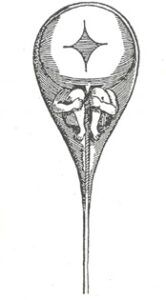
Other sources show that the image of the child Ariès described, the child as a miniature adult, was common throughout history. It probably found its strongest expression in preformationist theories in embryology.
For centuries, many scientists believed that a tiny, fully formed human being existed in the sperm or egg at conception.
They believed that a person was pre-formed from the moment of conception and simply grew in size until birth.
Preformationism in embryology dates back at least to the fifth century BC and appeared in scientific thinking throughout history.
Until the eighteenth century, most scientists held preformationist views. They accepted that they had no direct evidence of a fully formed little person at conception, but argued that it was transparent or too small to see.
Conclusion
If you spend time with children, please do not treat them, or expect them to understand things, as if they were adults. For example, when a child at the supermarket does not understand that the treat they want is not in your budget, do not get angry or say "Didn't I tell you we don't have money?"
Children should not have to carry these worries. Here's to a day when every child can grow up in peace and with enough of what they need.