
Cognitive behavioural therapy (CBT): a complete guide
In this article I explain cognitive behavioural therapy (CBT) and how it works. Whatever your background in psychotherapy, and however well you already know CBT, I will start from the beginning and keep things as simple as possible. I draw on the CBT training courses I have completed and on reputable English-language sources such as the American Psychological Association and Psychology Today. This page is updated over time. By the end you should have:
- an introduction to CBT
- an understanding of common misconceptions about CBT
- a short history of CBT
- the principles of CBT
- an understanding of how CBT works in practice
Common misconceptions about CBT
What does CBT stand for? CBT stands for cognitive behavioural therapy. Many things are said about CBT, and unfortunately many of them are not true. Before deciding whether CBT is right for us, or studying it in depth, it helps to know these misconceptions:
- Because CBT follows protocols, it cannot be tailored to each person's needs.
- Because CBT focuses on protocols, it ignores emotions.
- Because CBT aims to reduce symptoms, it does not deal with personality.
- CBT never lasts more than 6 to 20 sessions.
- CBT is superficial and has no depth.
- Because CBT is superficial, symptoms will come back.
- Because CBT is diagnosis-driven, it ignores human dignity.
- Because CBT is structured, it does not care about the therapeutic relationship.
- Because CBT is effective, it can be used for every disorder.
- If something goes wrong in CBT, it is the client's fault, because CBT works.
- Concepts such as countertransference, resistance and unconscious processing have no place in CBT.
In this article I look at CBT scientifically, away from these misconceptions. Keep in mind that textbooks describe disorders, not the individual person with a disorder, so we need to learn and apply this approach in a practical way. The truth is that the client needs to share accurate and sufficient information with the therapist, and, contrary to popular belief, CBT does pay attention to emotions and to the relationship between therapist and client.
How long does CBT take?

In terms of length, CBT is often described in three forms:
- Brief CBT: up to about 10 sessions.
- Classic CBT: about 10 to 24 sessions.
- Long-term CBT: from about 20 to 200 sessions.
Remember that all therapeutic approaches have value. Knowing CBT does not mean you no longer need to understand other approaches, and CBT is not better than every other therapy for every person.
A short history of CBT
CBT has gone through three major shifts, often called the first, second and third waves.
The first wave: classic behaviour therapy
Pioneers such as Hans Eysenck and Joseph Wolpe used the principles of classical and operant conditioning to treat disorders, with real success. Their focus was on observable behaviour, for example teaching specific everyday behaviours and skills.
Over time, problems with this approach became clear. For example, simply stopping thoughts did little to change rumination, and relaxation or behavioural activation alone did not work well for everyone. At the same time, cognitive psychology was on the rise, so some behaviour therapists began to argue that we were ignoring thoughts and beliefs, and should not focus only on visible behaviour.
Aaron Beck and Albert Ellis also developed ideas along these lines, which led to the second wave.
The second wave: cognitive behavioural therapy
The new approach worked on behaviour and thinking together. Around the 1990s, another generation emerged from this group, asking: if we are trying to change everything, from behaviour to beliefs, in order to change emotions, where does acceptance fit in? These questions led to the third wave.
The third wave
Modern CBT includes this third wave, which also brings in mindfulness, acceptance and emotion regulation. It developed alongside positive psychology, which some even describe as a fourth wave, although not everyone agrees, and we will certainly see further changes in the future.

The history of CBT in Iran
The first research on behaviour therapy in Iran is credited to Dr Shamloo and Dr Baraheni, who used systematic desensitisation with a girl who was afraid of cats.
Behaviour therapy began to be taught in Iran in 1985 at Roozbeh Hospital in Tehran, where Dr Ghassemzadeh taught it, and it became formally established in Iran around 1997.
In 1997, a Persian translation of the textbook Cognitive Behaviour Therapy for Psychiatric Problems (Hawton, Salkovskis, Kirk and Clark) was published, a major development at the time. This coincided with the early years of doctoral training in clinical psychology in Iran.
Interestingly, the first behaviour therapy courses taught by Dr Ghassemzadeh trained many of the clinicians who later chose CBT, and a wave of translated CBT books followed.
Which age groups can CBT help?
CBT is used from childhood to old age, and its scope is very broad:
- children and teenagers
- adults
- older adults
Key points about CBT
- CBT has been applied to both physical and mental health problems.
- It can be delivered individually, in groups, and with couples and families.
- CBT is used for primary prevention (for example, how to avoid developing anxiety), secondary prevention (if a problem has started, how to stop it getting worse) and tertiary prevention (how to reduce its effects).
- CBT is even used before birth: for example, with expectant mothers who experience anxiety.
- CBT can be used in health, organisational, educational, military and sport settings.
The principles of CBT
Every therapy is built on principles that we need to understand, and CBT is no exception. These principles are very important.


Key concepts in CBT
Several concepts help us work more effectively in CBT. The key ones are cognition, emotion (and the link between cognition and emotion, which is central to CBT), attention, behaviour and triggers.
What is cognition in CBT?
Cognition is the set of mental activities, or information processing, such as attention, concentration, perception, decision-making, memory and mental imagery. It works at two levels, explicit and implicit, and we need to understand both to use CBT.
Explicit cognition: for example, you categorise women as weak and you know you are doing it.
Implicit cognition: you are not aware of what you are doing. For example, your sister plans to visit and you assume she will not be able to find the address, so you ask your partner to send her a map pin instead of the address. Here you have made an implicit categorisation.
In CBT we need to recognise these processes. Attention is a good example: someone who is afraid of cockroaches keeps scanning for patches of light and shadow, such as near the curtains. Their attention has become biased.
Some describe cognition as the way the world is represented in the mind. Dr Hamidpour, an Iranian CBT trainer, compares cognition to a factory that is always working, or to breathing: we are always taking in information from our surroundings.
What is emotion in CBT?
An emotion is a set of feelings and the way they show up in the body; fear, for example, can show up as a shaking voice. We can feel several emotions at once, and we may or may not be aware of them. CBT pays a lot of attention to emotions. For example, a depressed person may recall only their failures, and these feelings show up in behaviour such as inactivity. I cover this in detail in the article on depression.
Emotions can be classified in many ways. The most useful distinction for CBT is between healthy and unhealthy negative emotions.
Negative emotions

Positive emotions

Whether an emotion is healthy or unhealthy depends on its intensity, duration, frequency and consequences.
In CBT we work on facing and processing emotions, while many clients try hard not to face theirs.
What does "behaviour" mean in CBT?
Behaviour is our response to triggers, emotions and thoughts. For example:
- Trigger: hunger at the end of a day of fasting
- Thought: "I should eat enough to make up for the whole day"
- Behaviour: eating without stopping
When behaviours are repeated, they become habits.
Adaptive and maladaptive habits
Adaptive habits have positive consequences in the short and long term, such as appreciating and listening to your child, which builds their confidence. Maladaptive habits do not, such as habitually lecturing and blaming your child, which can lower their confidence.
Whether a behaviour is adaptive depends on the person, the setting and the situation; no behaviour is always adaptive or maladaptive. For example, reading slowly and deeply is usually helpful, but reading the newspaper that way may not be. We need to look at the consequences.
Vulnerability in CBT
When a vicious cycle takes hold and a person is harmed without noticing it, we use the word "vulnerability".
Triggers, or antecedents
A trigger is anything that sets off our thoughts, emotions and behaviour. The way these elements link together is called the vicious cycle, and getting caught in it is often the client's core difficulty.
The vicious cycle in CBT
A situation activates our thoughts → our thoughts create feelings → along with those feelings we show a behaviour or set of behaviours.
The behaviour then affects the feeling (increasing or decreasing it) → which strengthens the cycle of thoughts.
Here is a real-life example of a vicious cycle for someone with social anxiety:
- Trigger: being invited to a birthday party
- Thoughts: "I have nothing to say", "I'm ugly", "I'm not attractive", "I'm too short", "I'm too thin", "I don't have the right clothes" (to map the cycle, we choose one)
- Feelings: anxiety, fear and embarrassment
- Behaviour: cancelling with an excuse, going but not talking to anyone, or taking a sedative before going
- Consequence: a temporary drop in the bad feeling
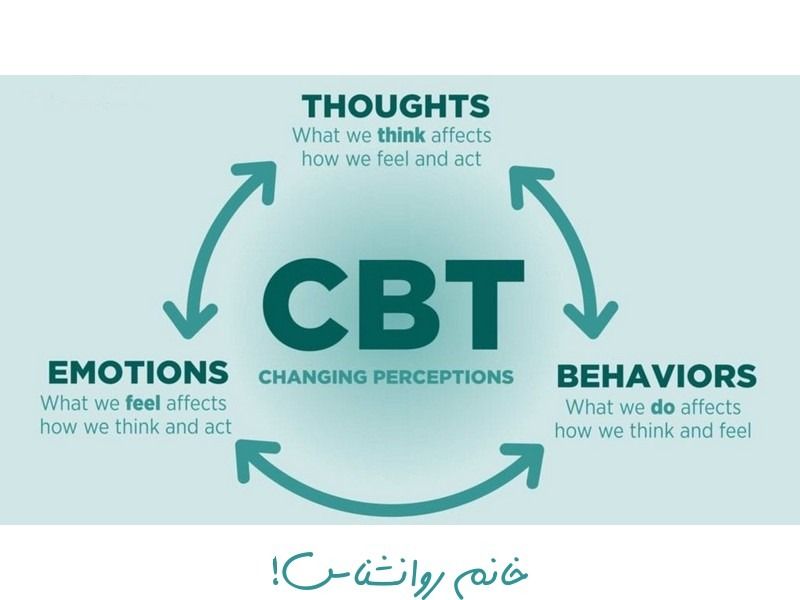
So the person learns: "If you are invited to a party, don't go." Over time they always make excuses, and others may stop believing them, so a new belief grows: "I can't even make a convincing excuse; everyone knows I'm lying." They become sensitised and avoid every invitation.
Because they avoid social situations, they never learn effective social skills, and their thoughts are reinforced rather than improved.
Bias: the person avoids every kind of social gathering.
CBT for obsessive-compulsive disorder
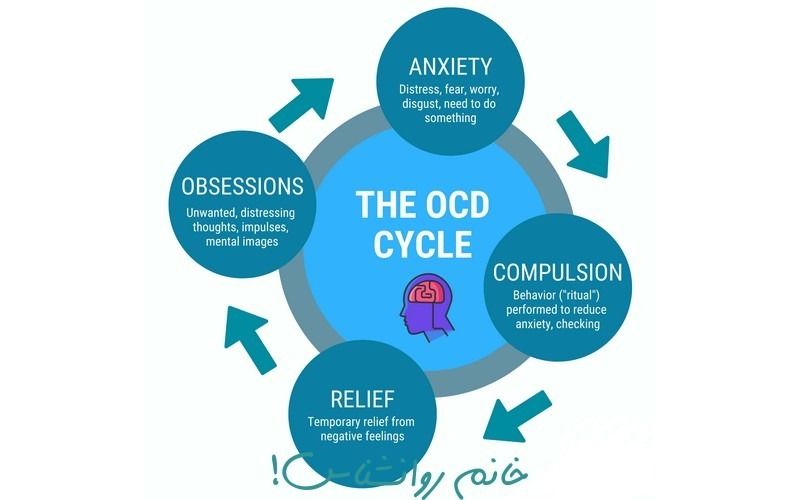
This example maps the vicious cycle in washing-related OCD:
- Trigger: travelling overseas
- Thought: "Everything is contaminated, I'll be exposed to dirt, and I'll have little control."
- Feeling: anxiety
- Safety behaviours: packing a washing jug, taking biscuits to avoid restaurants, or not drinking water to avoid using toilets
- Consequence: anxiety increases. Why? Because the person notices more signs of threat and their attention is drawn to them. For example, sitting in a park, they notice people eating nearby and think, "What if people like this sat here before me and spilled food where I'm sitting?" If they are religious and consider alcohol impure, they may worry that alcohol was spilled where they are sitting. People without OCD do not notice these things.
Bias: the person sees OCD-related cues more often and more vividly.
CBT for generalised anxiety disorder (GAD)
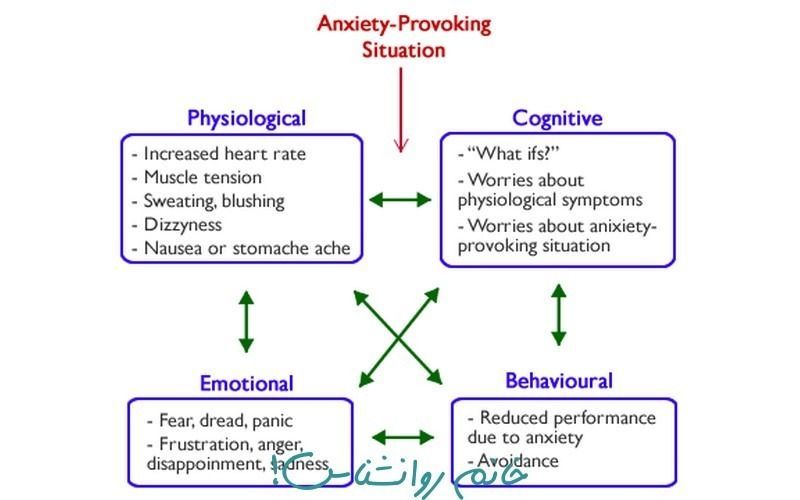
To map the CBT cycle for someone with generalised anxiety, here is an example of a parent who is worried about their child's education, a very common worry.
- The mother's belief: "My child must get into the best university. My child is as good as anyone else's, and the only path to happiness is getting into a top university. I have to control them, because when I don't, they don't study."
- Situation: the child is sitting on the couch playing on their phone.
- The mother's thoughts in the moment: "They won't get in. Giving them a phone was a mistake."
- Feelings: anxiety and worry
- Behaviour: glaring at the child, nagging and blaming, taking the phone away
- Consequence: anxiety eases for a while, and she learns that the more she nags and blames, the better (the behaviour is reinforced).
- Bias: she reacts to everything the child does that is not studying.
- Triggers: her partner asking about the child's progress, and any other situation involving the child's studies.
What is vulnerability, and why does it happen?
When we get caught in a vicious cycle, we say we have become vulnerable. Vulnerability is common and happens to almost everyone. The important question is why some of us can get out of these cycles and others cannot.
Types of vulnerability
- Genetic vulnerability: genes play a significant part.
- Cognitive vulnerability: beliefs that make us more prone to developing difficulties.
- Behavioural vulnerability: lacking certain habits, or having too much of them.
- Emotional vulnerability: experiencing some emotions too much and others too little.
The environment can also be a risk factor.
Types of factors in CBT
CBT looks at several kinds of factors:
Predisposing factors lay the groundwork for a difficulty, for example harmful parenting styles (comparison, favouritism), adverse childhood experiences (poverty, natural disasters, sexual abuse), parents who modelled unhelpful patterns, and genetics combined with environment.
Precipitating factors are the events or circumstances after which the difficulty began. For example, a person migrated and then developed panic attacks (migration is the precipitating factor). Acute or chronic stress is a common example.
Triggers are any object, cue, situation or person that brings back the precipitating and predisposing factors; for example, the smell of a favourite home-cooked dish for someone who developed panic after migrating.
Maintaining factors keep the problem going. How people deal with the problem matters, as does the short-term relief from negative emotions that makes a behaviour more likely to be repeated (like a smoker who learns that a cigarette calms them). Beliefs matter too: if someone believes "my problem can't be solved" or "only people with the same problem can help me", this can maintain it.
Pushing others into particular roles can also maintain a problem. In other words, when we have a difficulty, we may relate to others in ways that keep it going. For example, when someone in a family becomes depressed, another family member may support them, and if that support is used in unhelpful ways, the problem can continue (sometimes called the secondary gain of a problem).
Positive factors improve the outlook for therapy: for example, the person is motivated, has a support network, is psychologically minded, has had the problem only a short time, has strengths in different areas and has good relationships.
Negative factors worsen the outlook: for example, the person has had OCD for many years and five previous therapists have not been able to help.
Levels of treatment in CBT
CBT works at several levels:
- crisis intervention
- symptom reduction
- skills training
- reducing vulnerability
- personal growth
Which level to work at depends on the clinician's assessment of the particular client.
Assessment in CBT
In CBT, assessment means the purposeful process of gathering information from the client.
Assessment is a process that continues throughout therapy. In the first sessions we try to understand the client and enter their world; we reassess every few sessions; and we assess in the moment too (for example, when a client suddenly starts crying).
The aims of assessment
- understanding the client
- deciding whether CBT is a good fit
- choosing a CBT model
- developing a CBT formulation
- an initial treatment plan (Is medication needed? How many sessions?)
There are three ways to assess: interviews, questionnaires and observation.

The CBT interview
The CBT interview is semi-structured: neither rigid nor completely open. It usually covers:
- A problem list (clients usually name 8 to 10 problems).
- Exploring each problem (situation, thoughts, feelings, behaviour).
- When the problems began (what was the precipitating factor?).
- What else was happening at the time.
- How the problems have developed (worse or better over time).
- How the client has coped so far (their coping strategies).
- The client's belief system (listening closely, and using questionnaires).
- Emotions (which emotions they feel a lot, and which they rarely feel).
- Their strengths and achievements.
- Their current life situation.
- A brief life history (especially in classic CBT).
The aim of the CBT interview is to develop a formulation.

Observation in CBT
Therapy itself is an anxiety-provoking situation, so we watch for signs of anxiety and how the client copes with it: hesitating, avoiding eye contact, going off on tangents, vagueness, not doing homework, physical signs of anxiety, not engaging in the interview, and so on.
Questionnaires in CBT
Most core CBT concepts have questionnaires (cognitive behavioural measures). Short, practical questionnaires can support a more accurate picture of the client's difficulties. CBT also uses forms and checklists for more precise assessment.
So we gather information from the client first, then use questionnaires, and then observe the client's behaviour, building the picture in a coherent, orderly way.
Formulation in CBT
Once we have gathered information (about the client's past, their current life, their thoughts, beliefs, attitudes and unhelpful decisions, and the situations that trouble them), we need to organise it.
Formulation means organising the information we have gathered. We can do this in three ways:
- the vicious cycle of situation, thoughts, feelings and behaviour
- underlying psychological constructs, or vulnerabilities
- a list of factors
All three are useful.
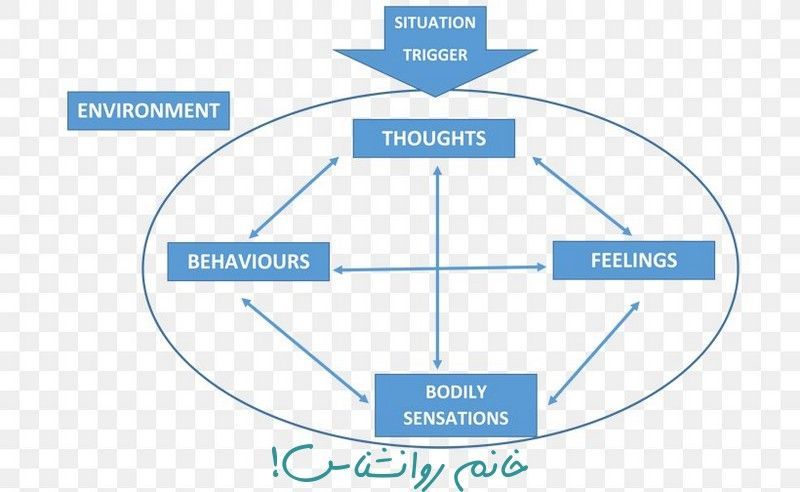
A CBT formulation for GAD
People with GAD often struggle when they have to make decisions.
- Situation: everyday decisions and major decisions
- Feeling: worry, leading to anxiety
- Strategy: reassurance-seeking (the anxiety spreads to other decisions, and if they make a wrong decision, things get worse and lead to self-blame)
- Predisposing factor: for example, controlling parents
- Underlying construct: fear of making mistakes
In this way the client's difficulties start to make sense.
Goal-setting in CBT
Goal-setting means agreeing on where we want therapy to take us. Goals let us see whether therapy is working. Psychotherapy is serious work, so we need a destination, and goals also matter in Adler's theory, which many clinicians value. Setting goals also helps us understand the client better.
In CBT we always ask the client what they hope to get from therapy.
Goals such as getting rid of all failure or all anxiety are not achievable, and holding on to them can work against therapy.
Education in CBT
Education means giving the client information; psychoeducation and socialisation to the model are forms of this.
There are two kinds of education in CBT:
- education at the start of therapy
- education during therapy
At the start we explain a simple version of the formulation (what is causing the problem), the features of therapy (clear, goal-directed and practice-based) and the rules of therapy (fees, cancellations and so on). Some therapists also explain the diagnosis to the client, and some do not.
The treatment plan
The treatment plan is the set of techniques and tools we choose to reach the goals. It is practical, because CBT has a clear structure; in simple terms, it is how we use each 45-minute to one-hour session.
Is CBT the right fit?
How do we know whether a client is a good fit for CBT? We consider several things:
- The research evidence: once we understand the underlying problem, we check the evidence for CBT with that problem. For example, if a client has GAD, we look at the research on CBT for GAD.
- The client's response to the formulation: for example, whether they disagree with it.
- Agreement with how CBT works: such as doing homework and being patient.
The structure of CBT sessions
Session structure begins once we put one of the client's problems on the agenda to work on. It describes how the therapist plans and manages a 45-minute to one-hour session:
- Check in on the past week (what has changed).
- Bridge from the previous session (a brief summary).
- Review the homework and set the agenda: which problem to work on this week, drawing on the problem list, the formulation, current life problems, or issues in the therapy itself.
- Work through the agenda.
- Plan homework for the next session.
- Summarise and ask for feedback.
The therapeutic relationship in CBT
The therapeutic relationship is one of the foundations of CBT. It works at three levels:
- empathy, understanding, honesty, support and acceptance
- collaboration between client and therapist
- resistance, transference and countertransference (such as the therapist feeling helpless)
When we talk about the therapeutic relationship, we mean the therapeutic alliance. A useful book on this is The Therapeutic Relationship in Cognitive-Behavioral Therapy by Nikolaos Kazantzis and colleagues.

Homework in CBT
In CBT, if the client does not do the homework, therapy does not work well, because skills training is part of the treatment, and without learning the skills, change is unlikely. You cannot learn to use a computer just by listening, although listening can be part of learning.
Homework means anything agreed in the session that the client will do before the next session.
Why it matters: without practice the client does not learn the skills. The aim is for the client to become their own therapist and learn to solve problems themselves.
Tips for homework
- Use a different name with clients, such as "practice" or "skills".
- Review the homework every week.
- Make tasks specific, concrete and detailed.
- Explain the reasoning and purpose of each task.
- If the client did not do it, explore why. (They may believe the therapist should do all the work.) With these clients, explore how they have handled tasks in life so far.
How many sessions will a client need?
As mentioned above, there are three forms of CBT. The number of sessions depends on:
- the range of problems
- how long-standing the problems are (for example, 17 years)
- how psychologically minded the client is

CBT and depression
Recognising depression is very important in clinical work. Sometimes it is straightforward: the client says they think they are depressed, or describes feeling that life is pointless, feeling at odds with the world, feeling stuck with their problems, weight gain or loss, guilt or sleep problems.
At other times, several factors make it harder to recognise:
- Severity: depression can be mild, moderate or severe.
- Duration: one person may have been depressed for two months, another for two years. When depressive symptoms last two years or more, this may be persistent depressive disorder (dysthymia).
- Bipolar disorders: when episodes of depression come with periods of elevated mood, the picture may be bipolar disorder. Bipolar I involves at least one manic episode; bipolar II involves hypomanic episodes (milder highs) along with major depressive episodes. When milder ups and downs continue for at least two years without meeting the criteria for these episodes, this is called cyclothymic disorder.
- Grief: depression needs to be distinguished from grief.
- Psychotic symptoms: if the person has hallucinations or delusions, this may be depression with psychotic features or another condition such as schizoaffective disorder, which needs specialist psychiatric assessment.
- Season: seasonal patterns of depression.
- Physical and biological factors: such as postnatal depression or premenstrual dysphoric disorder.
- Masked depression: depression that shows up mainly through other complaints.
- Personality: depression looks different depending on personality; for example, in someone with narcissistic traits.
I describe the types of depression in the depression article, so here I focus on depression that responds to classic CBT. In terms of treatment, depression is sometimes divided into depression that responds well to treatment and treatment-resistant depression, where a person has had several courses of treatment, or medication has not helped. CBT has also been adapted for chronic and treatment-resistant depression; Anne Garland is one of the researchers in this area.
With that in mind, here is how depression can be formulated in CBT.
Predisposing factors in depression
Genetics; losing a mother before the age of 11; cold, unaffectionate parenting; a family atmosphere of mourning; parenting in which the child is accepted only if they meet certain conditions (conditional acceptance); anticipating loss (such as a parent's terminal illness); and investing so heavily in certain things as sources of self-worth and identity that losing them leads to depression (over-investment).
Precipitating factors in depression
Usually loss, failure or rejection. Loss is not only about people: losing hopes and dreams can also lead to depression.
Triggers in depression
One of the main difficulties in depression is that the person cannot escape their triggers. Someone afraid of lifts or of the dark can often avoid them, but in depression many triggers cannot be avoided.
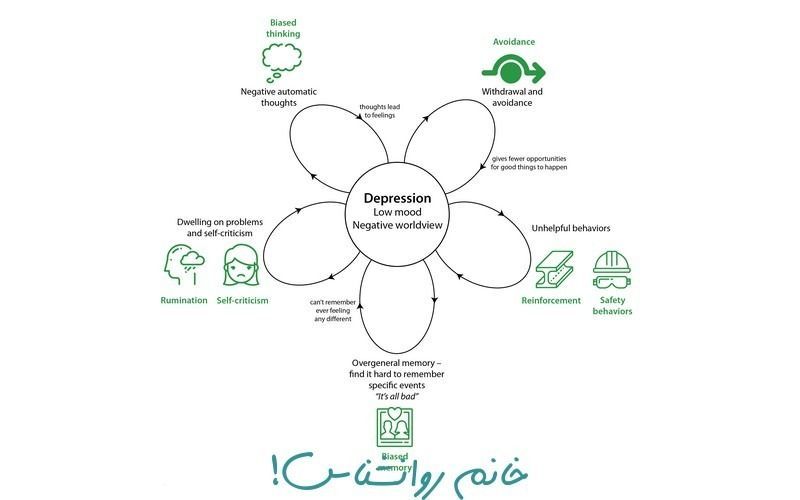
Maintaining factors in depression
The most common maintaining factor is avoidance as a coping strategy: socialising less, procrastinating and leaving responsibilities to others. Examples include blaming, over-analysing, replaying painful memories, smoking, aimless wandering, venting to others, sleeping and getting angry.
These coping strategies bring short-term relief. Coping strategies are not always negative in themselves: for some people, even prayer or reading a great deal can become maintaining factors. To decide whether a behaviour maintains a client's depression, we look at who is doing it, how much, to cope with what, and with what result.
Sometimes a coping strategy improves mood for a while (temporary relief from negative emotions), so the person keeps using it; sometimes it does not, and the person adds something else alongside it (such as smoking or drinking).
In CBT for depression, we help the person recognise and work through maintaining factors, challenge their belief system and teach skills, and their relationships often improve as a result.
Negative factors in depression
For example, the client has had an unhelpful experience with a previous therapist, or believes they can solve the problem better than anyone else.
Positive factors in depression
The person understands that every problem needs the right expertise, and that overcoming depression means trusting a professional.
A book that helps in understanding depression: Darkness Visible by William Styron.
Assessing depression in CBT
When interviewing people with depression, keep a few points in mind:
- Look for loss, and remember it is not only the loss of people (it can also be discrimination or injustice).
- Explore how the person has coped with their losses, and whether they have. (Depression can be seen as a loss we have not been able to come to terms with.)
- Always ask about suicide. This is a very important topic, covered in a separate article.
If you are thinking about suicide or are in danger right now, call 000. You can also call Lifeline on 13 11 14 or the Suicide Call Back Service on 1300 659 467, any time of day or night.
Observing depression in CBT
Look for signs such as sadness, hopelessness, a sad facial expression, low mood, a quiet voice, tearful eyes, being close to tears, crying or wanting to cry, and slowed responses.
Questionnaires for depression
- Beck Depression Inventory
- Beck Hopelessness Scale (hopelessness is one of the strongest predictors of suicide risk)
- Beck Scale for Suicide Ideation
- Automatic Thoughts Questionnaire
- Dysfunctional Attitude Scale
- Personal Beliefs Questionnaire
(These questionnaires are not all given at once.)
Setting goals for depression in CBT
As mentioned, CBT can aim to reduce the duration, intensity and frequency of symptoms, reduce vulnerability and support growth. If a client says their goal is simply to be happy, that is not something CBT can promise.
Some leading clinicians argue that when we are depressed and push hard to feel good, we can become more depressed, so the aim should not be to force ourselves to feel good but to use techniques that work. Why? Because we suddenly notice all the chances for happiness we have missed, start blaming ourselves, and the self-blame deepens the depression. A better goal in CBT is to reduce sadness step by step.
So far, we have a person with depression and have chosen CBT, one of the effective treatments for depression. We have done the assessment, and we know that loss and how people cope with loss are important. Next come the formulation and goals.
Education begins when we explain the formulation, the rules and the features of CBT to the client. If the client enjoys reading, we can suggest a book, but we should not tell every client to buy one, as that can work against the therapy.
Books for people with depression who enjoy reading:
- Coping with Depression by Ivy Blackburn (based on Beck's approach)
- Overcoming Depression by Paul Gilbert
- books about the "black dog" of depression, a phrase often linked with Winston Churchill
Aim: to reduce the intensity, duration and frequency of symptoms and improve quality of life.
Tip: if depression is moderate or more severe, start with behavioural techniques, because they can change behaviour more quickly.
Technique 1: graded activities
People with depression often put things off because they feel flat. Over time the backlog grows, tasks feel harder and harder, and the more they avoid, the harder things become. So what is the vicious cycle?
The cycle: low mood → no motivation → feeling flat → no energy → dropping tasks (avoidance or procrastination) → criticism from others and stress → stress lowers mood further.
We work with the client to break this cycle, for example by tackling procrastination, and we teach them how the cycle works.
Steps
We cannot simply tell a depressed person, "Get up and go for it, we're right behind you." That is not the method. Instead:
- List the activities the client is avoiding (important tasks they need to do but are not doing).
- Rate each activity by difficulty.
- Build a hierarchy.
- Choose an activity, starting with the least difficult.
- Break the chosen activity into small steps.
- Set these steps as homework.
*Every human activity can be broken into steps.
Explaining the formulation to a client with depression
First we share the formulation. Suppose a client is depressed after a breakup with a partner called Nikita. We might say: "It seems that since Nikita left, things have changed in your life and you are facing some difficulties, such as when you see Nikita's belongings and they bring back memories. This happens because you believed you would be happy with Nikita, and Nikita was very important to you (this explains over-investment). Now, when you see reminders of Nikita, you feel sad, and you keep wondering why they left. You have also pulled away from friends and stopped talking with your family, but the grief of losing Nikita does not let go of you. If your sister suggests you meet someone new, you get angry." Then we ask: "Have I understood the problem correctly?"
If they say yes, we say: "Let's work on this cycle so we can help you step out of it," and ask for feedback.
Then we explore the possible explanations the client holds, for example:
- "Nikita left because of who Nikita is."
- "It was because of Nikita's father."
- "It was because of my own mistakes."
"For now, let's focus on your part, because Nikita and their father are not here with us."
Interestingly, some clinicians believe that treating depression means treating procrastination, which makes sense: when people lack motivation, they drop tasks, and many of us do the same. Procrastination is not laziness; it is a pattern of avoidance, not a fixed personality trait.
Behavioural activation for depression
Behavioural activation is an effective treatment for depression and can be used as a model of therapy in its own right. Activity scheduling was part of Beck's original cognitive therapy, and behavioural activation was revived as a stand-alone treatment from the 1990s.
The reasoning: when we feel low and ruminate, we naturally turn to avoidance. Around us there may be people we do not like, or even people who hurt us, and other triggers can be distressing too, such as television that shows unhelpful content about our problem. Distressing triggers can be very broad. The person's solution is to avoid: withdrawing, staying silent, scrolling aimlessly online, lying down and staring, watching television without purpose, blaming others, blaming themselves, getting lost in questions about the meaning of life, reading existential novels such as When Nietzsche Wept, or therapy that is only talk with no action. These avoidant activities bring short-term relief, and that relief reinforces the avoidance.
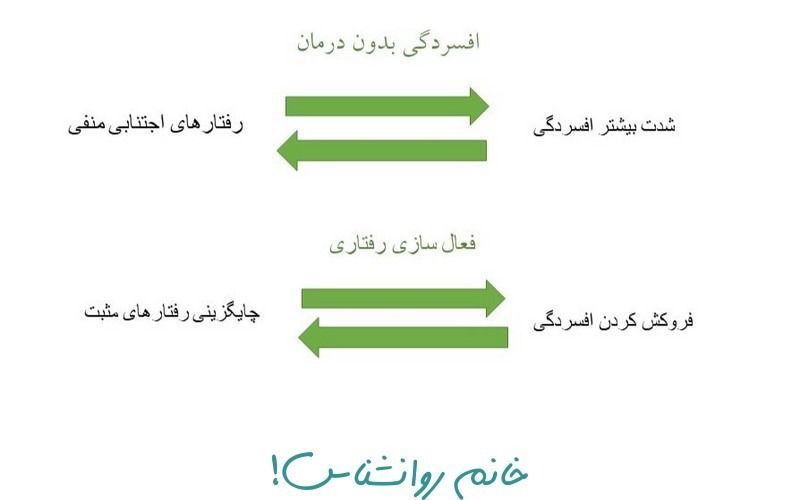
We explain this to the client in simple language so they understand why they feel the way they do. We want to replace avoidance with activation. In CBT we do not solve the client's problems for them; we teach them how to solve their own problems, and in the last few sessions we teach relapse prevention.
Here, in brief, are the steps a therapist follows:
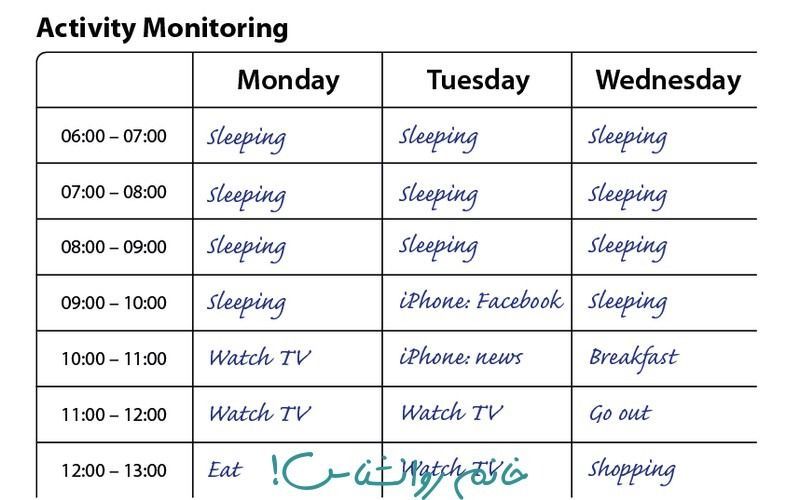
- Give the client a daily activity record to note what they do each day. Define an activity as anything that takes up an hour or more, and explain that activities do not have to be "useful".
- Ask the client to rate each activity for pleasure and for mastery (how capable they felt). If they did not fill it in, explore why.
- Show empathy.
- Review the activity record together (for example, look at any gaps). Remember that therapy begins where the client has resisted doing things.
- Let the client know that their life matters to you.
- Some activities score high for pleasure and mastery and others low. Use this to plan the next week, increasing the activities with higher pleasure and mastery scores, as long as they are not avoidant.
- Keep recording activities and repeat these steps.
Remember that many of everyone's activities are things we have to do, and not everything we do can be enjoyable.
Depending on how severe the depression is, this method is used for about 3 to 7 sessions.
Useful books on behavioural activation include Make Your Bed by William H. McRaven (on taking small, graded steps) and Behavioral Activation for Depression: A Clinician's Guide by Martell, Dimidjian and Herman-Dunn.
Problem-solving for depression in CBT
Problem-solving is now a therapy in its own right; there are treatments based on it.
- Sometimes problem-solving is used as a therapy.
- Sometimes it is an everyday skill.
- It can be used as a model of therapy (some argue that CBT itself is a kind of problem-solving).
- It can also be an attitude to life.
Many of us were never taught problem-solving well at school, so it is worth learning now.
Why does problem-solving matter?
Life is largely a series of problems to solve and decisions to make. From a CBT point of view:
- We may lack problem-solving skills.
- Coping strategy: blaming instead of solving the problem.
- Problem-solving is part of everyday life.
- Problems can lead to stress.
- Stress can precipitate or maintain depression.
- Because we do not know how to solve problems, depression itself becomes another problem.
- Depression, in turn, makes problem-solving harder.
- This shows how important problem-solving skills are, and how lacking them can lead to bigger and bigger difficulties.
- When we use problem-solving to treat depression, we explain what it involves, so the client does not expect us to hand them the perfect solution to every problem. We teach them how to solve their own problems, which in turn eases the depression.
Why don't we know how to solve problems?
Probably because we never had a model of good problem-solving, or because we hold unhelpful beliefs.
The problem-solving steps in CBT for depression
- Define the problem in concrete, practical terms (a problem is different from a complaint). A vague problem can itself keep the difficulty going.
- Set a goal. Sometimes the goal is to come to terms with the problem. Remember that many problems have no solution; some argue that a problem that stays unsolved after much effort is a painful reality we have not yet been able to accept.
- Generate solutions without judging them; quantity matters, so the more ideas the better.
- Evaluate the solutions: which ones are practical, which are not, which have already been tried? (No idea is thrown away, only set aside.)
- Choose and combine solutions.
- Try it.
- Review the result.
If a solution does not work, we naturally move on to another one.
A useful book: Cognitive Foundations of Clinical Psychology by Chris Brewin.
Key points about problem-solving
- Stress can be a predisposing, precipitating or maintaining factor in depression.
- Effective CBT has an excellent therapeutic relationship.
- Not every problem can be solved.
- Feelings are part of problem-solving and need to be handled well.
Since the early days of behaviour therapy, CBT has faced a great deal of criticism. It is one of the psychotherapies most open to criticism, which is one reason it keeps developing.
Assertiveness in CBT
A classic book on assertiveness is Your Perfect Right by Robert Alberti and Michael Emmons.
People with depression often struggle with assertiveness. The logic of assertiveness is about which interpersonal style we choose with others. Each person in a relationship has feelings, needs, rights and opinions, and people tend to fall into four groups:
- Aggressive: they put their own feelings, needs, rights and opinions first, and others are ignored and their rights trampled. They tend to be dominating and controlling.
- Passive: they put other people's needs and feelings first and ignore their own. They are often described as shy, passive, self-sacrificing or people-pleasing.
- Passive-aggressive: others seem to come first, but in fact they put themselves first, through sabotage, stubbornness or quiet undermining.
- Assertive: they value other people's opinions and needs while not giving up their own feelings and needs. They are honest and clear.
People with depression are often passive or, at times, aggressive rather than assertive. In CBT, therapists help people with depression become more assertive.
How to teach assertiveness
- Make a list of assertive behaviours, such as expressing opinions and feelings, making requests (first acknowledge the other person's positive qualities, then make the request, then explain its effects), refusing requests (being able to say no), starting conversations and making complaints.
- Identify problem situations. For example, in which situations do you find it hard to show affection?
- Rate the problem situations.
- Choose a situation, starting with an easy one.
- Practise the assertive behaviour in that situation.
Mood regulation in depression
Depression is a mood disorder, and because CBT is so widely used for depression, it is worth a brief look at mood regulation. One of the biggest difficulties for people with depression is regulating mood: their awareness of their emotions may be limited and they may not experience emotions fully. For example, they may cancel going to a party at the last minute. As therapists, we help people with depression gain more control over their moods.
The CBT cycle in depression
- Exhausting, sometimes intense and conflicting emotions.
- These emotions lead to mood-driven behaviours.
- Mood-driven behaviours have consequences, often unpleasant ones.
- These consequences make mood worse.
Treatment: help the client use an "emotional thermometer". Just as a thermometer shows body temperature, it helps to have a way to measure emotions. We can ask the client to set a reminder every hour to notice and record their emotions, their intensity, the time and the situation.
For example, a client might write: "11 am, intensity 100: I was so angry I could have exploded." If they can say what happened at 11 am, that is very helpful; if they cannot, something happened either inside them or outside them (for example, they compared themselves with someone else).
The bad feeling may then continue for the following hours, because emotions linger. How do we make emotions stronger? By ruminating, and by not having the skills to manage the situation or solve the problem, which most of us were never taught. That is why we give the client an emotional thermometer.
Helping clients name their emotions
Some clients have a limited vocabulary for emotions and may only say, "I feel bad." The therapist helps them break this down and find out what "bad" means: a mix of anxiety, worry and shame, perhaps, or something else.
Research suggests that putting feelings into words ("affect labelling") can reduce activity in the amygdala. So naming emotions accurately matters, and therapists help clients find the right words; for example, not calling anger "upset", or calling upset "turmoil".
Identifying mood-driven behaviours
We help the client notice what they do when they feel this way. The therapist might ask, "What do you do when you feel bad?" The client might say, "I go to my room and cry." That is not a bad thing to do, but it does not solve the depression. Crying, when it fits the situation, can help with grief. (For more on the healing effects of crying, see The Language of Tears by Jeffrey Kottler.)
Weighing the pros and cons of mood-driven behaviours
In the example above, going to their room to cry calms the person down, but it does not solve the problem.
Learning healthier ways to regulate mood
This is similar to behavioural activation. Some strategies are:
- Writing: set aside a specific time to write about your feelings (see Opening Up by James Pennebaker).
- Exercise, especially aerobic exercise.
- Getting support from others: people with depression may vent without taking in suggestions, so the aim is to look for real help.
- Becoming aware of anger: sadness can cover everything in depression, and we forget that the person also feels other emotions, such as anger. Psychoanalytic theory links depression with anger turned inwards; in CBT, Paul Gilbert has written about this, and his book Overcoming Depression is worth reading.
Any new behaviour should be balanced and lead to good outcomes, not become extreme.