
The Montessori method and Maria Montessori
Montessori classrooms aim to be places where children are engaged, energetic, curious and social, and above all where they learn to take charge of their own learning. They are also communities in which each child takes responsibility for their own learning while supporting others.
That may sound a little abstract, but don't worry: the Montessori method is not complicated. I simply wanted to start with how Montessori educators describe it. As always on this site, I will try to explain things simply. So who was Maria Montessori, and what is the Montessori method that so many psychologists and educators admire?
Who was Maria Montessori?
Maria Montessori was an Italian physician, educator and innovator, admired for an approach to education built on the way children naturally learn.
She opened the first Montessori school, the Casa dei Bambini ("Children's House"), in Rome on 6 January 1907. She went on to travel the world, writing and lecturing about her approach and gaining many supporters. Today there are thousands of Montessori schools around the world; I explain how they work below.
Maria Montessori's childhood
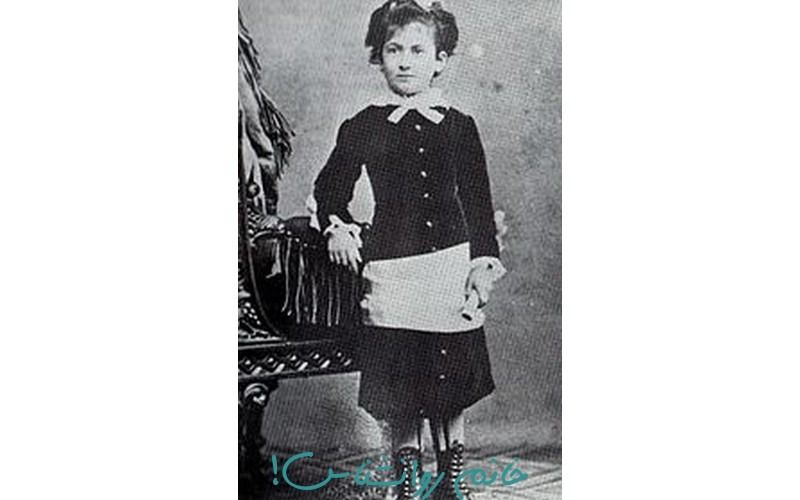
Maria Montessori was born on 31 August 1870 in the provincial town of Chiaravalle, Italy. Her father was a financial manager in a state-run industry. Her mother came from a well-educated family, was well educated herself and read widely, which was unusual for Italian women at the time. This helped plant a thirst for knowledge in the young Maria, who studied other sciences before developing her method.
From early childhood Maria lived in Rome, growing up among libraries, museums and good schools.
Breaking barriers in education
Maria was an excellent, confident and ambitious student who would not be limited by traditional expectations of women. At 13 she entered a technical institute, where all the other students were boys, to prepare for a career in engineering.
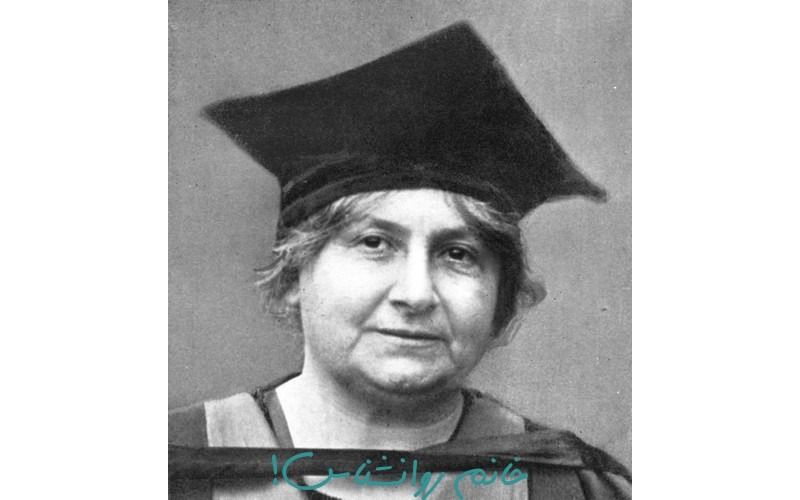
In time she changed her mind and decided to become a doctor. She applied to the medical program at the University of Rome and was rejected. She took extra courses to prepare and persevered, and eventually she was admitted, opening the door wider for women who came after her.
When she graduated from medical school in 1896, she was one of the first women doctors in Italy. Although she was not the very first woman to graduate in medicine, as some biographers have claimed, that takes nothing away from her achievement: succeeding in such a demanding, male-dominated field took great strength, dedication and persistence.
The birth of a movement
Montessori's early medical work focused on psychiatry. She later became interested in education, attended teaching courses and studied educational theory. Her studies led her to observe, and question, the usual ways of teaching children with intellectual and developmental disabilities.
The chance to improve these methods came in 1900, when she was appointed co-director of a new institute for training special education teachers. She approached the work scientifically, observing carefully and experimenting to find out which teaching methods worked best. Many children made unexpected progress, and the program was declared a success.
In 1907 she took on the challenge of opening an all-day childcare centre in San Lorenzo, a poor inner-city district of Rome. The children were 3 to 7 years old and were left largely on their own while their parents went out to work. This centre, the first of its kind in the country and a high-quality learning environment, became the first Casa dei Bambini.
The children were unruly at first, but soon showed great interest in working with puzzles, learning to prepare food and handling the learning materials Montessori had designed. She observed how children absorb knowledge from their surroundings and, in effect, teach themselves.
Drawing on scientific observation and her earlier work with young children, Montessori designed learning materials and a classroom environment that encouraged children's natural desire to learn and gave them freedom to choose their own materials.
Children in her programs thrived, showing focus, attention and self-discipline of their own accord. The "Montessori method" attracted the attention of leading educators, journalists and public figures. By 1910, Montessori schools could be found across Western Europe and were being founded around the world, including in the United States, where the first Montessori school opened in Tarrytown, New York, in 1911.
Maria Montessori and feminism
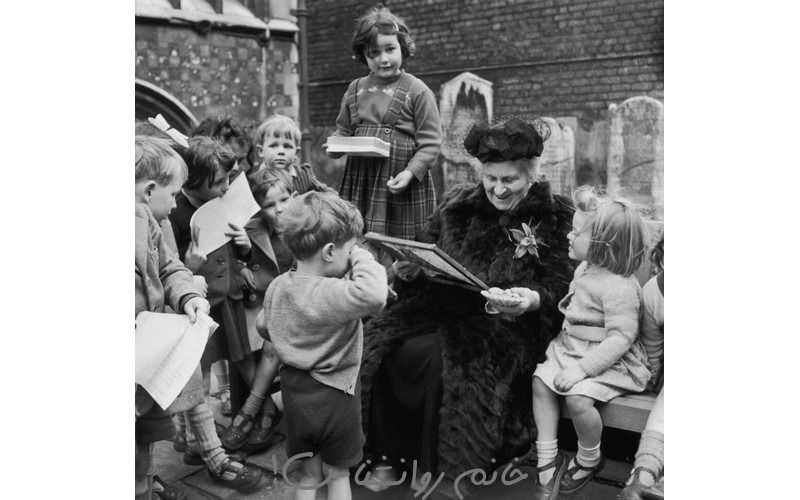
For the rest of her life, Montessori devoted herself to advancing her child-centred approach to education. She lectured widely, wrote articles and books, and created a program to train teachers in her method. Through her efforts and those of her followers, Montessori education became established around the world.
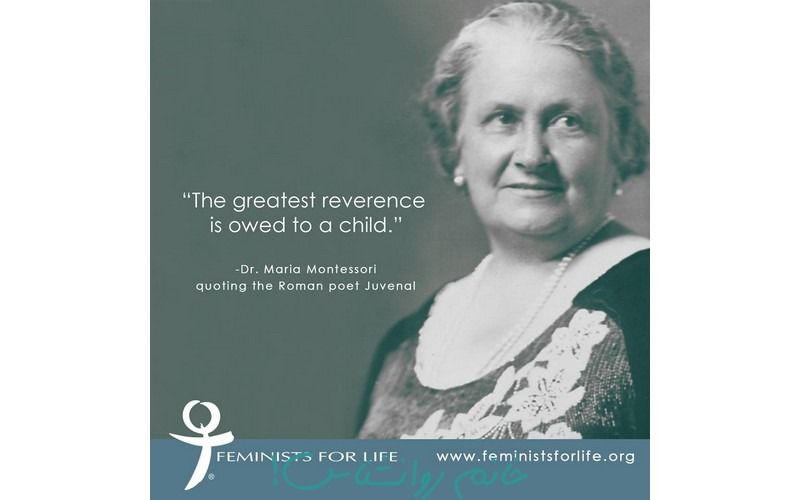
As a public figure, she was also a strong advocate for women's rights. She often wrote and spoke about the need for greater opportunities for women, and was recognised as a leading feminist voice in Italy and beyond.
Montessori pursued her ideals in turbulent times. Living through war and political upheaval led her to add peace education to the Montessori curriculum, but she could not avoid being caught up in world events. While travelling in India in 1940, when hostilities broke out between Italy and Britain, she was forced to live in exile until the end of the war. She used the time to train teachers in her method.
After the war she returned to Europe and spent her last years in Amsterdam. She died peacefully on 6 May 1952 in Noordwijk, the Netherlands, in the garden of a friend's house.
What is the Montessori method?
Montessori is an approach to education based on self-directed activity, hands-on learning and cooperative play. In Montessori classrooms, children make creative choices about their learning, while the classroom and the teacher offer age-appropriate activities to guide the process. Children work in groups and individually to discover the world and develop their full potential.
The Montessori classroom
Montessori classrooms are carefully designed to meet the needs of children in a particular age range. Montessori found that hands-on learning in this kind of classroom leads to a deeper understanding of language, maths, science, music, social interaction and much more. Most Montessori classrooms are secular, although the method can also be combined successfully with a faith-based program.
Each material in a Montessori classroom supports an aspect of the child's development, matching the child's natural interests with the activities available. Children learn through their own experience and at their own pace, following their natural curiosity and building a strong foundation for lifelong learning.
What happens in a Montessori classroom?
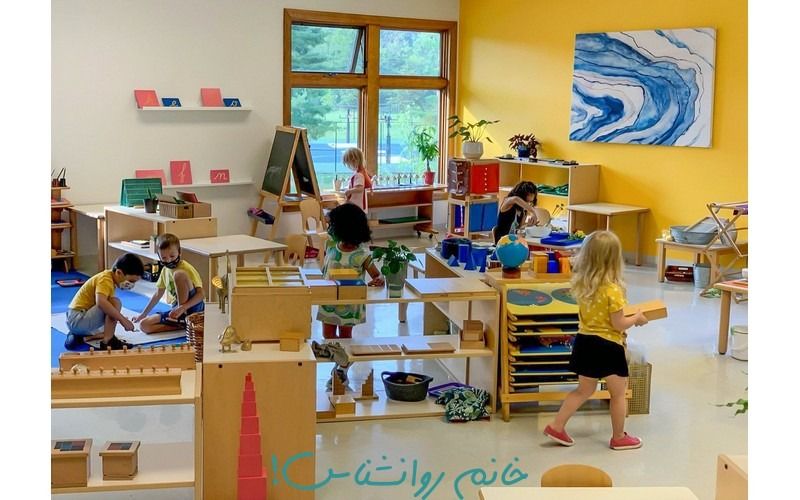
Montessori classrooms are calm, happy places designed for children's development. Each child's developmental needs at each stage are taken into account. The rooms offer many places for children to learn and play in different ways: alone, in pairs, in small or large groups, indoors and outdoors, at tables and on the floor.
Everything is child-sized, including furniture, shelves, dishes and cleaning tools. There is no single focal point at the front of the room, which shows that the teacher is not the centre of attention; the children are a community together.
Montessori classrooms are full of attractive colours, natural materials, interesting cultural objects and pictures on the walls, all offering rich sensory and intellectual experiences.
When children first enter a Montessori environment, they sense straight away that the space is made for them.
Children are also helped to develop their social skills.
Through role play and modelling, the teacher shows good ways to respond to disagreements or new situations, so that children can act with confidence and make good choices when a real problem arises.
The result is a self-regulating classroom, where everyday social tensions are mostly resolved by the children themselves. Children move freely around the room, choose activities that interest them, or work with the teacher individually or in small groups. The teacher does not restrict their movement unless they put themselves, others or their surroundings at risk. Outdoor spaces are also important in Montessori schools, offering opportunities to connect with nature.
The principles of Montessori classrooms
After all this, you may still wonder what a Montessori classroom really means. Do they just let children do whatever they like?
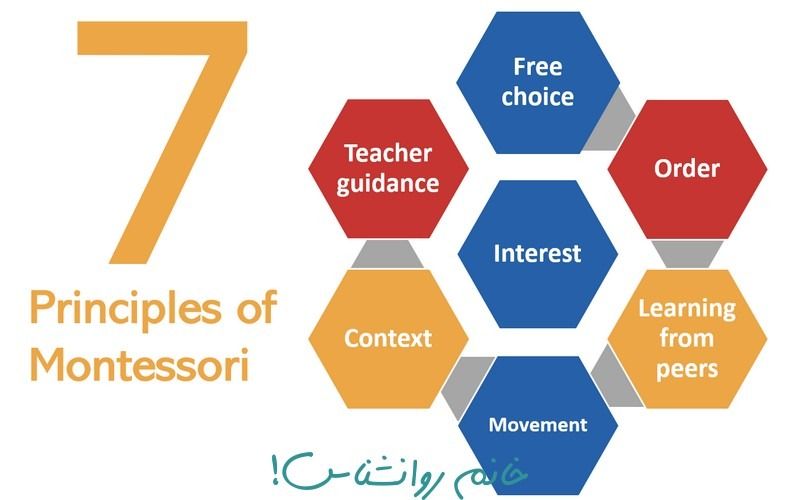
No. The Montessori method rests on a set of principles that answer this question. They are the same at every age level and have been developed over more than a hundred years of work with children around the world.
1. Respect
Montessori deeply respected children and the developmental drives that lead them to seek particular experiences. Montessori education reframes the adult–child relationship to put the child at the centre of their own learning.
Teachers respect children as unique individuals. They guide children to respect the people and objects around them, and as children grow, to understand and respect the connections between all living and non-living things, leading to a deep awareness of how human life is interconnected.
2. A prepared environment
Children's needs change as they move through stages of development, and at each level of Montessori education the classroom is prepared to reflect this. The environment is prepared for healthy development in every way: physically, cognitively, socially and emotionally.
By matching the activities in the environment to what each child needs at each moment, prepared environments free children's energy for growth and learning.
3. Hands-on learning
Montessori classrooms are interactive environments where hands-on exploration is not only encouraged but essential. Using mind, body and senses, learning becomes an activity that engages the whole child. Montessori environments build on children's natural urge to be active by offering a suitable range of objects and activities to engage with meaningfully.
4. Discovery
One of the deepest differences between Montessori and conventional education is that children are given the experience of discovering answers for themselves. This leads to deeper learning and a lifelong love of learning as a self-directed process of problem-solving and discovery.
5. A trained teacher
The trained Montessori teacher connects the child to activities and experiences in the prepared environment. Specialist training gives the teacher a deep understanding of each activity's purpose and use, and of how to build and keep social harmony in the classroom.
6. Imagination
The Montessori classroom supports imagination and creativity at every stage of learning. Open-ended activities let children explore new ideas and relationships, laying a foundation for self-expression and innovation. In the early years, the building blocks of imagination are laid through sensory exploration of the world around them.
7. Freedom of choice
Montessori recognised that when children are allowed to choose within clear, firm and reasonable limits, they behave in positive ways that support their development. Freedom is often misunderstood as meaning children can do whatever they want; Montessori believed that freedom without limits is abandonment. In Montessori classrooms, expectations are clear and children experience the natural and logical consequences of their choices. This freedom within limits allows natural development and self-regulation in the classroom community, and prepares children for the expectations of society as they grow older.
8. Independence
From the moment of birth, people strive towards independence, and children feel this need strongly. They want to do things for themselves and take part in the world around them. Montessori classrooms nurture this natural drive through practical, social and intellectual experiences. The child becomes an active agent in their own education, as if saying, "Help me to do it myself", and adults honour this by helping children move to greater independence and self-reliance.
The Association Montessori Internationale
The Association Montessori Internationale (AMI) was founded by Maria Montessori in 1929 to protect the integrity of her work and support high standards for teacher training and schools. Today AMI continues to uphold her vision while engaging with current research in neuroscience and child development, and AMI-recognised centres around the world train teachers to work with children from birth to twelve.